 AFA Connect
Space Force’s NSSL Forecast Adds 91 Missions—and About $17 Billion
A reported NSSL forecast adds 91 missions and nearly $17 billion to the Space Force program through fiscal 2032.
By Joy Glip ·
Original AFA Connect reporting. Facts are attributed to the public records and reporting listed below. Report a factual error.
Sources and records
- Space Force Expects to Spend $17B More on Launch as Demand Soars — Air & Space Forces Magazine
- Space Systems Command On-Ramps Two New Providers to National Security Space Launch Phase 3 Lane 1 Contract — U.S. Space Force Space Systems Command via DVIDS
- SLD 45 supports the first National Security Space Launch mission on a Falcon Heavy rocket — U.S. Space Force via DVIDS
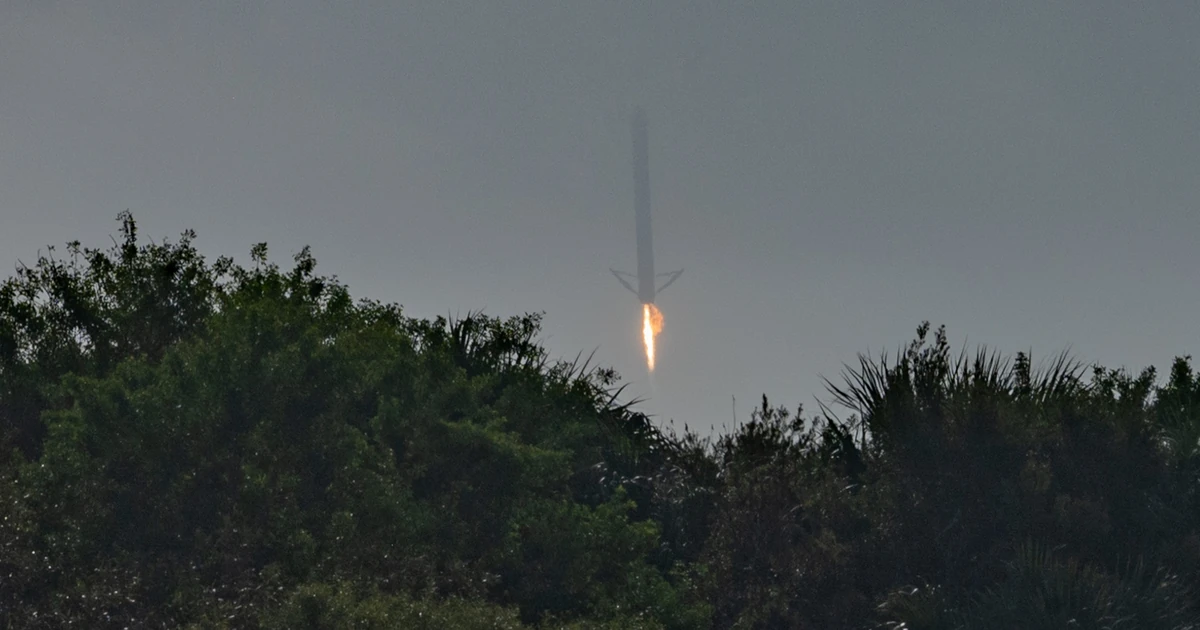
Image: A Falcon Heavy launches the first National Security Space Launch mission flown on that rocket from Kennedy Space Center, Florida, on Nov. 1, 2022. U.S. Space Force photo by Senior Airman Dakota Raub. The 1200 × 630 presentation image retains the full source width, removes 250 pixels of upper sky and 129 pixels of lower foreground vegetation, and adds or alters no objects within the retained crop
The Space Force’s national-security launch forecast has expanded by 91 missions and nearly $17 billion, a shift that makes launch capacity—not simply rocket availability—a central acquisition test.
Air & Space Forces Magazine reported, after reviewing the Defense Department’s latest Selected Acquisition Report for National Security Space Launch, that the program now covers an expected $76 billion in procurement for 337 launches from fiscal 2004 through 2032. AFA Connect could not directly review that acquisition report; the forecast figures here are attributed to the magazine’s account rather than presented as independently confirmed from the underlying report.
Those figures describe an estimated program baseline, not money already obligated and not a single contract award. The nearly $17 billion increase also should not be treated as the price of buying 91 interchangeable launches. National-security missions carry different payload, orbit, schedule and mission-assurance demands.
Both Phase 3 buying lanes are expanding
Phase 3 uses two competitive tracks with different assurance demands. Lane 1 handles missions closer to commercial launch profiles, while Lane 2 applies the more rigorous path required for critical payloads whose schedules and risk tolerances leave less room for failure.
Air & Space Forces Magazine reported that the Space Force raised the Lane 1 contract ceiling from $5.6 billion to $17 billion and increased anticipated volume from early estimates of 30 to 60 missions to approximately 170 launches over five years. It also reported that emergent requirements are adding 25 Lane 2 missions, increasing that lane from 54 to 79.
A ceiling is the maximum capacity of a contracting vehicle, not a commitment to spend the full amount. Actual obligations will depend on task orders, mission assignments and contractor performance. Likewise, forecasted missions are planned demand, not proof that every launch will occur on the current schedule.
More providers do not automatically create more throughput
An official Space Systems Command release shows how the service has been preparing the supply side. In March 2025, the command added Rocket Lab and Stoke Space to the Phase 3 Lane 1 contract alongside Blue Origin, SpaceX and United Launch Alliance. Brig. Gen. Kristin Panzenhagen said the goal was to increase capacity, resiliency and speed.
Expanding the provider roster can increase competition and give the government more options, but eligibility to compete is not the same as demonstrated capacity to execute a dense national-security manifest. Each mission still has to move through vehicle readiness, payload integration, range scheduling and the assurance process appropriate to its lane.
The strategic issue is assured access at a higher tempo
National Security Space Launch exists to place military and intelligence payloads into orbit when and where the government requires them. The Falcon Heavy pictured here flew its first NSSL mission in November 2022, according to the official DVIDS record.
The reported forecast points to a substantially larger flow of national-security payloads. The decisive measure will not be the announced size of the provider pool or the contract ceiling. It will be whether the Space Force can convert that structure into reliable launches without allowing integration bottlenecks, range congestion or weak cost controls to erode assured access.
The preserved public record reviewed here does not establish the final mix of missions among providers, the amount that will ultimately be obligated, or whether every forecasted launch will occur on the current schedule. Those remain execution questions—not settled outcomes.
Have a correction or additional primary-source documentation? Contact AFAConnect.