 AFA Connect
What the F-22’s CCA control test proves—and leaves open
An F-22 pilot directed one YFQ-44A in an airborne test. The disclosed milestone links human intent to autonomy, but does not establish operational readiness.
By Joy Glip ·
Original AFA Connect reporting. Facts are attributed to the public records and reporting listed below. Report a factual error.
Sources and records
- F-22 directs Collaborative Combat Aircraft in airborne tactical-control demonstration — Secretary of the Air Force Public Affairs
- F-22 Pilot Directs CCA in Flight as Airborne QB — Air & Space Forces Magazine
- YFQ-44A Fury at Creech; July 20, 2026 contextual photograph — U.S. Air Force
Image: U.S. Air Force photo by Senior Airman Renee Blundon
An F-22 pilot gave tactical directions to a single YFQ-44A Collaborative Combat Aircraft in an airborne demonstration earlier in October, according to an October 16 Department of the Air Force release. The important distinction is how those directions became aircraft actions: the pilot issued high-level instructions, while software aboard the uncrewed aircraft interpreted and executed them.
That division of responsibility is more informative than a shorthand claim that a fighter pilot “controlled a drone.” The disclosed event tested a relationship between human intent and onboard execution. It did not establish that an operational formation of multiple uncrewed aircraft is ready for combat.
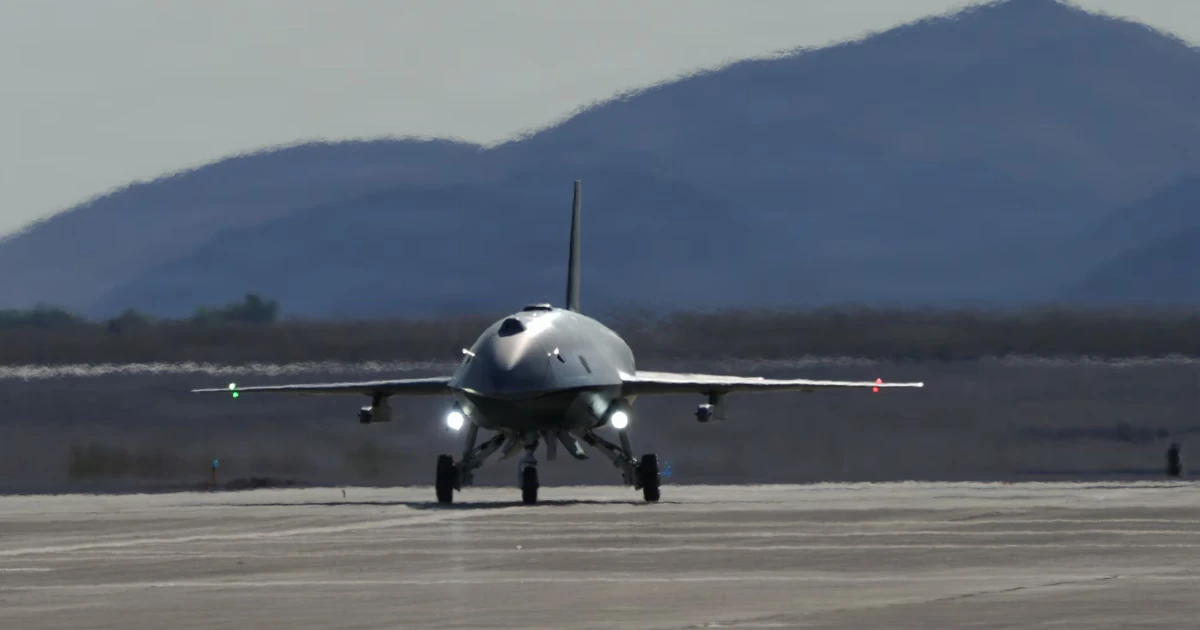
A YFQ-44A Fury taxis after landing at Creech Air Force Base, Nevada, on July 20, 2026. This contextual file photograph does not depict the October F-22 control demonstration. U.S. Air Force photo by Senior Airman Renee Blundon. Use does not imply Department of Defense endorsement. Official photo source.
What the Air Force actually reported
The official account describes an F-22 pilot acting as an airborne “quarterback,” giving high-level tactical directives to one YFQ-44A. Its onboard autonomy software interpreted and executed those directives in real time, carrying out dynamic flight maneuvers and simulated combat tasks.
The release does not describe the pilot manually flying the aircraft through every maneuver. Nor does “simulated combat tasks” establish that a weapon was released or that a combat engagement was demonstrated. Those are different claims, and the public account does not supply evidence for them.
Air & Space Forces Magazine’s report also describes the F-22 directing the YFQ-44A in flight. This analysis rests on the narrower facts in the official release rather than treating additional company statements as independently measured performance.
Why the distinction matters
The test’s significance is the connection between an airborne pilot’s tactical instructions and a separate aircraft’s autonomous execution. That is a concrete step beyond discussing how crewed and uncrewed aircraft might cooperate. But demonstrating that connection in the disclosed event and showing that it works reliably across operational conditions are not interchangeable findings.
The public release gives no measurements of pilot workload, task-completion reliability or performance under disrupted communications. It also provides no demonstration of one pilot directing multiple CCAs simultaneously. These omissions are limits on what readers can conclude from the published account—not evidence that the aircraft failed those tests.
For the same reason, the event does not settle how much attention a pilot would need to devote to the uncrewed aircraft while handling other duties. An interface that passes high-level instructions may distribute tasks differently from direct manual control, but the release does not quantify the resulting workload.
A test milestone, with more testing ahead
The Air Force says it will use data from the event to inform continued software integration, developmental testing and future CCA concepts. That stated next step matters: the department presents the event as an input to further development, not a declaration that a fielded multi-aircraft capability is complete.
This is a different milestone from the arrival of CCA aircraft at Creech for operational experimentation. The new question is not simply where the aircraft are being evaluated, but what an airborne pilot can direct them to do—and how much of the execution resides aboard the uncrewed aircraft.
The useful takeaway is therefore specific. The Air Force reports that one F-22 pilot issued tactical directives that one YFQ-44A interpreted and executed autonomously. The scale, repeatability and operational burden of that relationship remain questions the public release does not answer.