 AFA Connect
What the Air Force's $766 Million B-52 Radar Awards Actually Buy
Two new awards advance B-52 radar modernization, but only $80.96 million was obligated immediately. Here is what the contracts cover—and what remains unresolved.
Original AFA Connect reporting. Facts are attributed to the public records and reporting listed below. Report a factual error.
Sources and records
- Pentagon contract notice: Contracts for Aug. 25, 2026 — U.S. Department of Defense
- B-52 Bomber: Air Force Actions Needed to Improve Major Modernization and Sustainment Efforts — U.S. Government Accountability Office
- The B-52: Why is the Air Force Spending Billions to Modernize a 70-year-old Plane? — U.S. Government Accountability Office
- Air Force awards $766 million for B-52 radar modernization — Breaking Defense
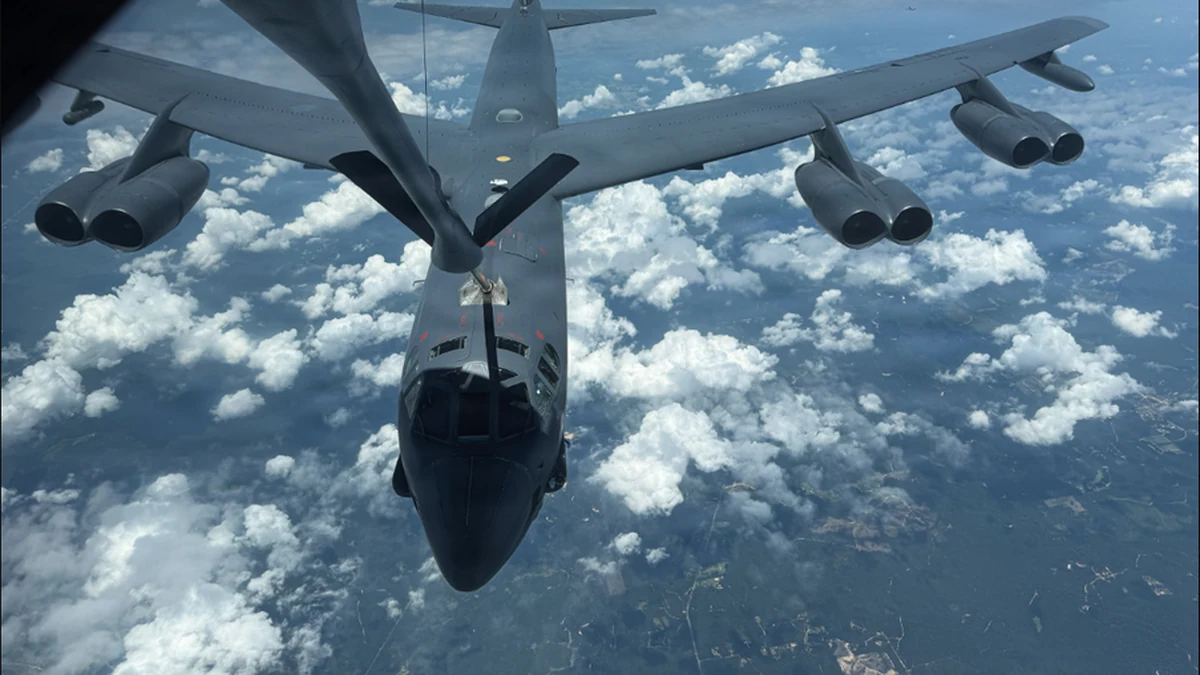
- 260630-F-DE541-2028 — U.S. Air Force
Image: U.S. Air Force photo by Airman 1st Class Helen Ly
Two Air Force awards announced this week carry a combined maximum value of $765,966,689. That headline number is a ceiling, not a same-day expenditure. The contract notice says $80,960,621 was obligated when the awards were made—about 10.6% of the combined potential value. Put another way, $685,006,068 of the combined maximum was not obligated at award. That remainder is not a cancellation or savings figure; it is potential contract capacity that would require future funded actions before becoming spending.
What the two awards cover
Raytheon received a $603 million ceiling indefinite-delivery, indefinite-quantity contract for production and sustainment of the AN/APQ-188 radar for the B-52 Stratofortress. The Air Force obligated $46,008,396 with the initial delivery order, and the notice lists expected completion by Aug. 20, 2031. The contract number is FA8628-26-D-B001. Official contract notice.
Boeing received delivery order FA8628-26-F-B002 with a maximum value of $162,966,689 supporting the B-52 Radar Modernization Program. The Air Force obligated $34,952,225 at award, and the notice lists expected completion by Dec. 20, 2028. Official contract notice.
Both actions were sole-source awards through the Air Force Life Cycle Management Center at Wright-Patterson Air Force Base, Ohio, according to the Pentagon notice. They were awarded Aug. 21 and included in the Aug. 25 contract announcement. Official contract notice.
Why the wording matters
The $603 million Raytheon figure is an IDIQ ceiling: it establishes how much the Air Force may order under the contract, rather than certifying that the entire amount has already been spent. The Boeing figure is a maximum delivery-order value. Separating those ceilings from the initial obligations gives taxpayers and Air Force stakeholders a clearer picture of what moved immediately.
The new awards also do not close every risk surrounding the B-52 modernization portfolio. A July Government Accountability Office review found that 10 of the aircraft's 13 modernization efforts faced cost, schedule, or performance challenges. GAO said the Air Force projects about $21 billion in total B-52 modernization spending. GAO report.
GAO's six recommendations address the engine program's production decision, digital engineering, two updates to the Platform Integration Plan, repair planning for possible modernization delays, and responsibility for B-52-specific support equipment. GAO recommendations.
What happens next
The fresh awards move radar production, sustainment, and related modernization work forward. Contract ceilings, however, are only one milestone. Delivery orders, obligations, testing, integration, and the Air Force's response to GAO's recommendations will determine how much capability is fielded, when it arrives, and what it ultimately costs.
AFA Connect will update this report if the Air Force publishes material changes to the contract scope, obligations, schedule, or program status.